Values Clarification: A crucial step in building self esteem

What is values clarification?

Values clarification is the attempt to expose the value systems that function in a person or a group. These value systems need clarification because they are hidden beneath the surface. On the surface are the opinions, actions and behavioural patterns of a person or group, but the values that motivate these opinions and actions are often buried in the unconscious. Clarifying your values then gives you the opportunity to discover your value and so build your self esteem. It is a crucial step for building self esteem.

A value system is the network of presuppositions you might have about perceived reality. I say perceived reality because these presuppositions determine how you interpret life. It is not how life really is, but rather how life is for you In this way values form a frame of standards through which you interpret events as being real/not real, true/false, good/bad, right/wrong.

Values are the presuppositions in the system that hangs together in a particular manner to colour the way in which any given person or group of people views reality. Together the values in the system provide a frame through which life is understood.

Framing is the act of selecting a relevant position from which you can analyse and understand events. The network of presuppositions that shape a person’s value system is not made up of one frame only, but rather a matrix of frames. The framing of reality is an unconscious action natural to the human brain. You do it without even knowing that you are doing it. It is the way people cope with the complexities of everyday life. Because you are yourself part of your own perceived reality, you also interpret your self through the framework of presuppositions.

How does values clarification build self esteem?

The meaning of life

Life becomes meaningful to us relative to the frame through which we are looking at it. Framing enables you to analyse your life from where you are now using the values that are present in your system now. Tomorrow you see things differently because events and circumstances may have changed or shifted your frame a little. The frame is always appropriate to a particular perspective and time. This means that the meaning of life is constantly evolving and changing according to our frames, our value systems.

Values clarification helps you to clarify the meaning of life for you

Knowing the meaning of life for you where you are now helps you take stock of your life so that you can deal with it. ‘Dealing with it’ will boost your self esteem.

Identity

Since your frames, or values, are the go-betweens between you and your world, and since your matrix of frames is unique, your frames tell you who you are. Through knowing your frames you get to know yourself and construct (consciously or unconsciously) your identity.

Values clarification helps you to clarify your identity

If you know who you are, chances are you will discover you like yourself. Then you can work on how to express yourself in ways that communicate who you are. This will build your self esteem.

Personal growth

Your frames can become oversimplified, inflexible, or inappropriate to your context – especially if your context has changed for some reason. In such cases it becomes important for you to re-evaluate and adapt your frames. If you do this well, two things can happen. Either you will redefine and strengthen your values becoming more of who you really are. Or you would adapt or adjust them to help you align yourself with the needs of your circumstances. This often means you become more flexible and open to change, but without compromising your self. Either way your self esteem is boosted.

But if you do it badly and make the wrong choices, you could be buying into value systems that pull you further and further away from who you are. You simply exchange your identity for a mask or a false set of beliefs that do not express your inner spirit. Though this could boost your confidence or your status short term, it could have dire consequences for your self esteem in the long run. You lose self respect and confidence in your ability to express who you are.

Values clarification helps you grow or regress

Furthermore, because frames are embedded in your culture, a re-evaluation of your values implies a re-evaluation and adaptation of your culture too. Again you can establish and refine your culture, or chose to disidentify with it and move against it. Again it can be done well or badly with matching consequences.

Refining and strengthening your values will build your self esteem. Denying who you are and going against your nature will weaken it.

Why use stories to help with values clarification?

Since you only perceive reality through your cultural frames you do not have the option of stepping outside the frame in order to see reality as it truly is. The only option is to compare frames to one another and choose different ones that may be more appropriate for you.

Stories enable you to create a fictional setting which allows you to step into a make believe frame and out of your reality. You step away from your matrix of frames so that you can evaluate it by comparing it to some make believe alternatives. This allows you to adapt the frame or choose a different, more context appropriate one. Even better, if you dramatise your alternative by acting it out or imagining it through writing, you can try it out safely without the danger of real consequences. Story acted out or imagined through creative writing is the ideal tool for making value systems conscious, evaluating and adapting them.

Stories help build your self esteem by clarifying your values and so allowing you to
– find the meaning of life for you where you are now
– clarify your current identity and
– strengthen who you are in the present moment

Dr. Petro Janse van Vuuren

Story course 2.6 – Id, ego and the sacred marriage


So, here we are at the second of the two twilight zones in our story: The Ordeal and Reward. Unless we can engineer an experience that drives each character to the edges of his or her desire, we cannot find out what they are really made of.

Every character has 3 layers and these layers get revealed as the story progresses. 1. Objects and actions

First there is the outer layer of objects and actions. This layer is important for the beginning of the story because through the things a character owns and the things he or she does, we get a good idea of what they are like. We can start to identify with him or her.

After the Call to Adventure, the character’s underlying needs, the reasons for his or her actions and attraction to certain objects becomes clear:

Jemimah likes beautiful things, but what she desires is eternal beauty and wealth.

Mariana hates violence and wants peace, but what she needs is purpose and meaning.

Charles likes weapons and action, but what he wants, is to be in control.

Ouma Nollie likes her cats and talks to the echoes, but what she needs is the silence and darkness to discern the truth.

Elizabeth likes to run her kingdom strictly and allows herself little time for fun, but what she needs is power and order and someone who can help her to maintain it and grow it.

2. Underlying needs and desires

Through the adventure each character gets totally focused on fulfilling his or her desire. We see Jemimah on the back of a dragon becoming more beautiful and more determined as she rides towards Id. Mariana, strapped to the dragon as Jemimah’s captive is passively awaiting her destiny, sure that it awaits her in the land of Id.

Charles gathers all his weapons and all his men to take Id captive and bring him to justice.

Elizabeth goes to await Charles’ arrival. He will complete her and help her get back the control and power in her kingdom. Like a true saviour he will come over the water and deliver her enemy so that she can set it right.

And Nollie is so pleased with the order of things as she watches her words come true, she awaits the return of her peace and quiet.

Our ordeal must work in such a way that each character’s worst nightmare comes true instead of the fulfilment of their deepest desire. This is to peel off the ego layer and reveal the characters’ true nature and core value. 3. Core value – authentic self

In each of their final confrontations, the Id and the ego must see each other fight it out and both give way to a less dualistic existence and a more integrated self. This coming together of opposites is referred to by Joseph Campbell as the ‘sacred marriage’. This is Little Red becoming one with the wolf as she is swallowed. She is then saved by her opposite: an adult man and so comes out more whole than when she went in.

Jemimah is rewarded by Id for capturing Mariana and he gives her the fountain of youth. Beautiful forever, she discovers an emptiness and a loneliness and cannot bear the thought of this feeling continuing to infinity. To be truly beautiful she must choose mortality and time and friendship…

Mariana must face taking violent action to break free from her passivity and fulfil her purpose, or she will die without finding meaning.

Charles must be stripped of weapons and the ability to act so that he can accept aid and let go the incessant need for control. In this way he may gain control of his addiction to control…

Elizabeth must face the truth about herself: that she feels inadequate to follow in her father’s footsteps and therefore feels that she needs a companion. Charles must arrive in chains as captive not victor. She must find completeness and enough-ness in herself to regain her kingdom.

Nollie will have to accept a more active role in the everyday goings on of other people and return in some measure to life above ground – or does she?

And suddenly I know exactly what needs to happen…

Can’t wait for next week!

Petro

Improv Class 5 – Make up your own story

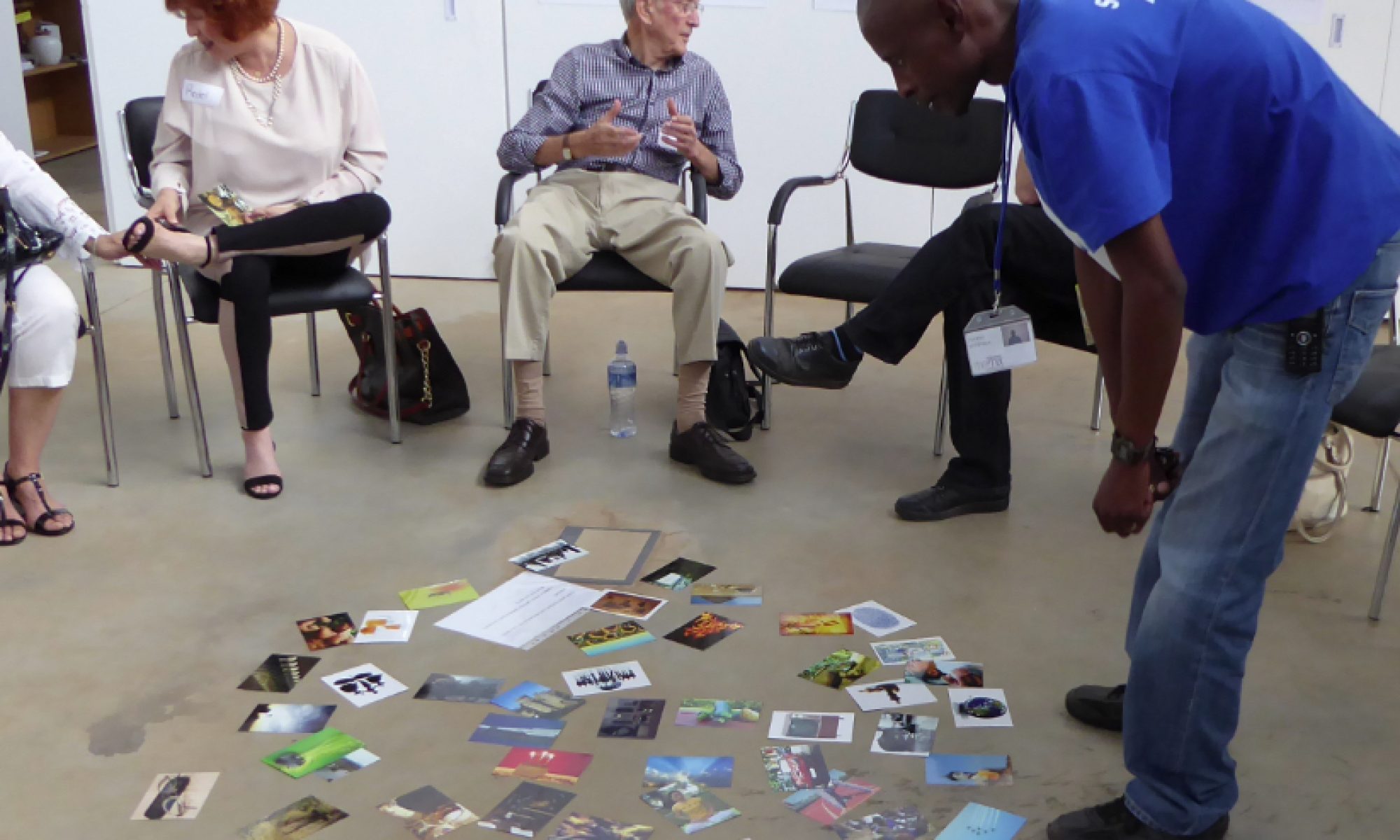
Story was the focus of this week’s class. We started the class with an exercise from Imago Relationship Therapy. In this exercise each participant gets the opportunity to say in a few sentences what they need to say to be fully present. One of the others must then mirror that persons exact words back to them. The exercise is not so much about saying what you need to say to be present, but being listened to fully without judgement. When we listen to people like this we help them to become fully present. In essence what we are doing is accepting them and showing them that they are welcome and worth being listened to.

The next exercise was a game call Todododo in which we had to make word associations keeping a rhythm. This illustrates how much easier it is to come up with ideas if you stop trying so hard. This is why in Improv we say “be average”. If you stop trying to be perfect and get everything right , it helps to lower anxiety and your brain can relax and function better so that your creativity can surface. After that we played another word association game in which we just made associations around the circle. This game illustrated how our minds automatically make links between random words. In the next game everyone paired up with one other person. The one had to come up with 4 unrelated sentences that the other had to connect together to create a story. Relating random events together is what makes a story. At first it sounds like a difficult task but as I mentioned earlier the brain does it automatically. Our brains are wired that way. Relating events together and making up stories is how we make sense of the world.

Then we played Automatic Story. In this game one player has to ask yes/no questions about the storyline of an unknown story that the other player has in mind. What the questioning player doesn’t know is that the person answering the questions is only saying yes to questions starting with a vowel and no to questions starting with a consonant. The person asking the questions is therefore making up the story without knowing it. This game illustrates how easy it is to make up our own stories. Isn’t it interesting how in life we also often think that someone else is in control of our tale, while we are actually the authors of our own life stories?

The next game that we played was What happens next? In this game one player stands in the middle of the circle and acts out a story that the rest of the group make up one sentence at a time. After each sentence the player asks “What happens next?” To improvise a good story in a group there are 4 important guidelines-

• Free association: Free associated ideas create the material from which a story can be constructed.

• Reincorporation: Reincorporation is the recycling or re-using of ideas or situations from earlier in the story. By reincorporating ideas and situations you make sense of the random ideas generated by free association.

• Platform: The who, what and where of a scene. Success of a scene often depends on a solid and clear platform.

• Breaking routine: A good story that will engage an audience is a series of routines that are broken creating new routines.

I believe that if we want our lives to be good stories we must become aware of routines that are limiting us and break them and create new routines. And when the new routine starts to limit us we must break it again. Routines can be anything from a mindset, to a hab it to a physical space. The harder it is to break the routine, the higher the risk and the better the potential for a really good story.

As a footnote: Sandra Lee Schubert co – facilitated a writing program for 10 years where participants would weekly share immensely personal pieces of some aspects of their lives. In a conversation, her co-facilitators asked why they had to be so personal. She asked, “ Why not? “There is a deep, deep desire to be heard. People want to stake their claim in the landscape of story. Intimacies are shared because we want to take the power back. Why should someone else define your story?

Fun tongue twister!

Here is to everyone who played, laughed and spoke confidently with me last Saturday at the Grow your Voice to Speak with Confidence workshop in Pietermaritzburg!

This one is not in the manual I gave you:

To sit in solemn silence
In a damp dark dock
Of a pestilential prison
With a life long lock

Awaiting the sensation
of a short sharp shock
From a cheap and chippy chopper
On a big black block

Let me know how you are doing and how the practicing is going.

Story course 2.5 – The task and the team


Once all the characters have worked through their first twilight zone and
decided how they will respond to the Call to adventure, the journey section
of the story commences in earnest. For the heroes of a story, nothing will
ever be the same again. Their world has changed forever and they must
respond to it in a way that makes sense to them.
The middle stage of a story is filled with mostly two things: people and
problems or the team and the tasks. The heroes meet both friends and enemies
and they meet with tests and trials, some of which they master, but most of
which they fail. Then finally an inevitable confrontation looms.

Again I see 3 elements in this part of a story:

1. Tests and trials: the hero meets obstacles, but experiments with
changing the way s/he used to do things. Sometimes they triumph, but mostly
they fail. The hero must try new alternatives and take drastic measures.

Because of this... (The hero faces the fist challenge)

2. Allies and enemies: As the hero tries to accomplish the goal s/he
had set, there is both support and resistance from other characters. Usually
a side kick or loyal supporter is balanced with a sceptic who is not so sure
about anything. Emotions and reason battle it out at every obstacle. And the
hero meets a contagonist or difficultator who threatens his/her mission. 

But... (Obstacle 2: tradition/temptation/distraction)

3. Approach to Inmost Cave: The hero regroups for a final onslaught and
prepares for the most difficult task. This is also the task that will test
his/her character to see if they had learned from their trials. . The group
is restructured and the original plan revised. Stories about the community
are told to inspire and encourage them.

Because of this... (Hero becomes more aggressive and passionate,
regroups and makes plans)

In our story we have done the first test. Armed with wisdom from Ouma
Nollie, the wise old Oracle, two groups formed. Lord Charles and the Queen
grouped together as they ride out to gather their armies. Jemimah and Mariana
stay behind with Ouma Nollie to see what Mariana's magic sword can do for
them as it begins to lurch and hum in Mariana's hands.

The queen has managed to recover from her jealousy and weakness. Like a true
queen, she has suppressed her personal problems to deal with the matters of
her people. Now she wants Charles and his men to ride with her to the land
of Id to negotiate a settlement. Charles, of course wants to finish the
battle and then ride up to attack Id and destroy him by force. They are on
each other's team, but have different ideas for the solution. Finally they
part each to his/her own army to meet later for the final confrontation:
Charles will cross the waters to Id, capture him and bring him to the queen
for talks.

Back in the dungeons under the burnt out palace, the sword in Mariana's hands
pulls her towards Jemimah. It reels and rumbles and Mariana cannot make out
the meaning of this. Jemimah is flustered and distressed. Ouma Nollie
repeats the words she had spoken to them earlier as the echoes gave her
answers to their questions. To Mariana she repeats: 'All is not as it seems'
and to Jemimah she repeats: 'Stand up for what you believe'. Under great
strain Jemimah grabs the sword, captures Mariana and admits that she is an
agent for Id. She calls for her dragon and kidnaps the Lady to the land of
Id...

We have not yet come to our 'Approach', but the stage is set. Not only must
Charles capture Id, but he would also have to free Mariana. Would the Queen
now consider riding to battle in support rather than waiting for Charles to
do all the fighting and saving? What will Ouma Nollie do? How will her words
for Charles and the Queen manifest?

Watch this space for next week's episode of The Rainbow Land of Isle...

Please send me your characters' questions and the echo's replies by leaving
a comment here. Thanks.

Story class 2.4: Internal debate

The second stage of every story is the first of two twilight zones. The twilight zones lie between the beginning and the middle and between the middle and the end of a story. They are most interesting because they are riddled with duality and contradiction. It is the hero’s choices in these moments that determine the success or failure of his/her story.

This first twilight zone is often referred to as the Debate stage. Either the hero is in conflict with the people around him or he is racked with internal conflict.

Our own story class heroes had a bit of both, but it was the internal conflict that was most revealing last Tuesday as we explored the debate stage of our story.

Again there are 3 elements that can help you structure this part of your story:

1. Refusal: The hero resists change, but if the crisis is not addressed, it could pose a threat to the group. But… (obstacle 1: personal resistance – the hero doesn’t want to go)

2. Meeting the Mentor: The hero overcomes reluctance; sometimes leaders take action to save the hero and the community. Because of this(a mentor appears to help and guide them, perhaps through giving them a magic item)

3. Crossing the threshold: The hero commits to change. Harmony is restored or the group regresses into crisis.

And so… (the hero goes)

We started the night with Queen Elizabeth’s celebration in full swing. She followed Jamimah’s plan to hold a celebration for Lord Charles’ victory over Id and his vikings. She also invited Lady Mariana, who assisted Charles in the fight. But she was not interested in honouring her. She wanted to make her jealous because she wanted to entrance Lord Charles and make him notice her, the Queen of most of the Land of Isle.

Jamimah is singing one of her most popular numbers as the guests watch in delight. But to the side Charles and Mariana are talking with each other. They are both noticing a change in the land: why this sudden onslaught from Id? Why this unusual celebration? They would rather go back to their regions to ready themselves for further battle. All is not well. Jamimah is worried that her plan is not working and tries to interrupt the conversation.

But while all this is happening above ground, someone else is present.

Under the palace in the catacombs of the unused dungeons lives a little old lady with her cats. Ouma Nollie had been living here for a very long time talking and listening to the echoes in the chambers under the earth. She loves the queen’s parties because she can sit under the main floor vent and bathe herself in the music. But she is not prepared for what is about to happen…

Above ground the queen is seething with jealousy and frustration because she is not succeeding in capturing the attention of Lord Charles. This is why she is left vulnerable when the first Dragon from Gigantica strikes…

As the palace is set ablaze by the fiery breath, Charles automatically takes charge. He orders all guests into the dungeons for safety while he himself takes cover to save what he can and find out what is happening.

In the dungeons everyone is struggling with their emotions and in the dark Ouma Nollie clutches her cats to her bosom.

Charles soon returns with the devastating news that the palace and surrounding buildings (including Jemimah’s villa) had been badly damaged. Everyone must save what they can and return to meet in the dungeon for a meeting to decide what to do.

Soon they are back together, but it is clear that everyone is struggling with internal conflict:

1. Charles looks like he is in charge and knows what to do, but inside he is overwrought with doubt and uncertainty.

2. Elizabeth wants to get up and fix everything, take control and work her power, but she was caught in a vulnerable position and finds herself needing help for the first time in many years. Will her father’s memory guide her?

3. Jemimah brings her rescue remedy for coping with the situation as well as a means of killing herself in case it does not work. She does not know whether to face the prospect of staying in the dungeons for a while, or escaping into oblivion.

4. Mariana is tempted to stay behind and stay passive, but she had really made her choice when she first road to battle with Charles. Now even the meeting seems like too much of a hastle, she wants to be on the road.

5. Ouma Nollie wants her solitude and yet something in her urges her closer to the group. A need to be heard, a need to share…

Ouma Nollie is the natural Mentor for the group with her wisdom and her years and insight into the meaning of the echoes. So here is how we will start our next class:

Still unaware of Ouma Nollie’s presence, everyone is together to discuss what needs to be done. As the debate reaches a peak they hear a cough and a mieaauw out of the shadows….

If I get your character or your part of the story wrong, please comment on this blog and fix it!!

See you next week as we cross the threshold with Ouma Nollie’s wisdom and start the adventure in earnest.

Improvisation class 3 – Make your partner look good.

We started the class with a relaxation exercise to help us become aware of our bodies. Becoming aware of your body is a great way to get out of your head and become present. Next we played a series of mirroring exercises. First just one person creating a sound and a move which is mirrored by another player, then everyone mirror’s the person. Finally everyone is mirroring everyone. It takes a lot of awareness of the other players to adapt to whatever they are doing. Mirroring your partner is a great way to make your partner look good. Check out this Ted Talks Video about how a crazy nut is turned into the leader of a movement by someone else who made him look good by mirroring his moves.

Luci commented about how it was easier to just follow the men in the group than the woman. Is this because the men made louder noises and bigger movements? Or is it because of social conditioning? A good improviser is aware of everyone in the group and can pick up subtle offers. A good improviser is also aware in every moment, knowing when he/she needs to take control and take initiative and when he/she needs to give over control and allow someone else to take focus.

After the mirroring exercise we played a game called “Gifts”. In this game a player gives another an imaginary gift without having to know what it is. The one receiving the gift must say what it is and accept it like it is the one thing they’ve always wanted. This game illustrates how physical gestures can also be offers. The one receiving the gift accepts the physical offer and builds on it by saying what it is. By accepting the gift with so much enthusiasm he/she also make his/her partner look good.

The last game for the evening was “Blind offers”. In this game one player starts with a physical movement, another player then enters and says something that accepts the first player’s movement and justifies it. The first then replies in a way that builds on the second player’s comment. eg. First player makes a physical movement that looks like someone scrubbing a floor. The second player enters and says, “John the deck better be spotless before we set out on our voyage.” The first replies, “Ai ai Captain!” Antoinette made a very important statement after the class. She commented on how difficult it was for her to come up with a response to the first player’s movement. She realised that the reason for the difficulty was that she thought that she needed to say something funny. She realised however that if she just focused on the other player and tried to make them look good, it’s much easier to come up with something good. Jacques also mentioned that it was much easier to just go on and start making a physical movement because he knew his partner will accept it and build on it.

So how often do we do this in real life? How often are we focused on making our partners look good rather on just making ourselves look good? How often do we block others in an attempt to make ourselves look good?

Story Class 2.3 – The dramatic tension of the undercurrent

A story usually begins with someone in some situation that is for some reason unstable. The context in which a story starts is usually too good to be true or too unbearable to endure. Either way, there is always an undercurrent of pending imbalance. This underlying dramatic tension will feed the story and propel it forward.

For little Red Riding Hood the imbalance is illustrated by the fact that she always wore her red riding hood – so much so that people forgot her real name and called her Little Red Riding Hood. There is the hint of an undercurrent that says to the reader/listener: This situation can not last long, something must change…

In our story class this week we created 4 very promising characters:

1. Lady Mariana who hates violence and has managed to keep peace in her land with the help of her magic sword. But now she longs for purpose and meaning. She has her peace, now what?

2. Lord Charles the can’t-sit-stiller, who loves adventure and action, but has never really felt like he had done something worthwhile. He itches for something full of action and risk, but also meaningful so that he can feel he deserves some rest. Until then, he feels, he can not ever sit still.

3. Queen Elizabeth, the control freak, who reigns her kingdom with a strict hand and a clear understanding of what is right and proper. Yet, she is lonely and longs for a companion to share the responsibility so that maybe for a moment she could let her hair down and have a minute of fun.

4. Gemima the extravagant drag queen who loves beautiful expensive things and who knows how to have a good time. She is popular and successful on the outside, but longs for a lost love from a long time ago whom she cannot pursue. She is also aging and she knows her moments in the spotlight are counted.

There is great potential for character development and transformation for all four these characters. Our challenge for the coming week is to present them with a Call to Adventure that will focus their energy and propel them into their journeys.

It may be helpful to think about a last straw kind of experience. This is an event or opportunity that grabs the attention of the character and forces them to take action of some kind.

Ideas we have already mentioned are:

1. Queen Elizabeth organises a big celebration in her palace to which she invites all manner of performers to come and entertain her guests. Gemima is one of the first to respond…

Questions:

What is the occasion that warrants such a celebration?

What does this opportunity offer Gemima that she is so keen to jump for it?

2. A huge battle breaks out in the Land of Isle (where our story takes place) and pulls in both Lord Charles and Lady Mariana.

Questions:

Who started the fight and why?

Why is Lord Charles involved? What is at stake for him and why is it so important?

Why is Lady Mariana involved and again what is at stake for her and why is it so important?

3. The very same battle happens to interrupt the Queen’s celebrations and she is forced to break her her routines and change her plans.

Questions:

How did the battle come to involve her?

Why was she unaware or unmoved by it at first?

Idea: Was this perhaps the Queen’s battle and she was already celebrating her victory when she met unexpected resistence…?

With all this in mind, please finish your stories for the coming week using the following as a guideline. Always remember that the formula or template I offer is just to spark your thinking. Use it to make sure all the elements are there, but don’t necessarily follow it to the letter.

The first stage of your story needs three elements:

1. Protagonist: The main character is introduced and the scene is set.

Once upon a time there was… (someone somewhere in some situation)

2. Ordinary World: All is well, but there is an underlying problem. Usually the protagonist does not see the problem, but can experience some sense of dissatisfaction. They are either stuck in something too idyllic too last (Lady Mariana) or in a situation that is becoming unbearable (Jamima).

Everyday he/she/they would…(they do something that shows who they are now, but with underlying dramatic tension)

3. Call to adventure: The hero (protagonist) becomes aware of the problem and is asked to address it somehow. The enemy or antagonist often shows up in this scene.

Then one day…(a crisis calls them to action and potentially change. They may meet an enemy).

Looking forward to next week!

Petro

Story Class 2.2 – Why should you want to attend my story class?

My story work teaches 3 things:

Story structure: the five stages of a hero’s journey.
Essential archetypes: the 4 forces needed for plot development
Building character: the 3 levels of character growth.

What can you do with this information?

1. Write stories: you can use it to create fictional stories with transformational power.
2. Personal growth: you can use it to understand and design your own life story.
3. Teaching, training and mentoring:. If you are a teacher, facilitator, parent or manager, you can use it to structure other people’s stories: classes, workshops, programmes, events etc.
4. Marketing and presentations: You can use it to structure material and content for talks, presentations and marketing material.

Playing Mantis has a product for each of these applications:

Story Course: To play with fictional story so that you can learn to write your own.

Your Present success Story: using story for personal growth amd engineering your own success story.

Leading for Transformation: Training to help you impact the lives of others and instigate change.

Structuring your story: A presentation skills workshop to help you use story in structuring talks, presentations and marketing material.

Why is story structure such a powerful tool?

There is a mythic structure underlying almost all stories. It serves the purpose of taking the main character in the story on a journey of self discovery and personal growth. If you have read the Bible, or studied Greek mythology, or heard fairy tales from your grandmother, studied some Shakespeare at school, or just seen a few Hollywood films, you would recognize this structure right away.

Knowing this structure is useful because our personal cycles of growth and learning take the same shape. This applies to individuals and to groups. Story tellers through the ages have tried to first explain and then to instigate change. Story is the toll they use to do both.

The personal growth of a fictional hero mirrors the pattern of personal growth for you and the people around you. If you understand the structure and are able to wield it, you can understand how and why people change and grow and you can use it to instigate change and growth.

The problem is that change and growth is uncomfortable. Stories make the pain more bearable. Stories makes concrete that which is abstract. It simplifies things that are painfully complex and they give us perspective on what we see as our struggles. Stories allow us to come out of our lives for a moment and get a little safe distance so that we have renewed energy to get back in there and live the lives we were meant to live.

How do you want to use story structure now where you are in your journey?

To play with and create fictional stories? then the Story course is for you. Personal growth will be a welcome side effect, but is not the main aim.

To undergo personal growth? The Present Success Story Workshop is for you. It involves you and your life story.
To lead and teach others? Leading for Transformation is your thing and you will experience personal growth as a necessary component.

To structure presentations, talks and marketing material: Structure your Story is the product for you.

I think I made too many assumptions about you last night. I assumed that you knew it was about creating and playing with fictional stories that has transformational power. I apologize for the confusion and the uncertainty. Thank you for your grace and generosity. Think carefully what you want right now in your life, where do you want to take this?

I will call each of you for a conversation on where you are and what you want right now.

Stories and story structure are tools for guided and cushioned change. If you do not want change, or transformation right now, you do not need any of our courses. You are in a place where you need to rest and gather yourself. Honour that. But if you want to experience something different, create something different and live a different life, walk the road with Playing Mantis.

Dr. Petro Janse van Vuuren

Improvisation Class 2 – Listening and awareness


The theme for last night’s Improvisation class was listening and awareness.
Listening and awareness is fundamental for improvisation. Like I mentioned in the previous class, everything is an offer in improvisation and the more offers you can become aware of, the more you have to work with. Mayah remarked on how MacGyver is a good example of this. The character could always get himself out of life threatening situations by just using whatever he could find in his immediate surroundings. A quote from Mr MacGyver Season 2: ” I say we trust our instincts, go with our gut. You can’t program that. That’s our edge.” That’s why I always say Improvisation skills are crucial, because it could save your life.

We started the class with a classic Keith Johnstone exercise, that I call “change 3 things”. Participants pair up and observe one another. They then turn back to back and change 3 things about their appearance, like loosen one button or role up a sleeve. They then turn back to each other and try to identify the changes. I repeat this with 6 changes and then 10 changes.
The more challenging the game gets the more participants become aware of the other person.

The next exercise we played is an Augusto Boal walking exercise that I call “Stop go”. In this game all the participants walk around spreading themselves evenly across the space. When I clap they must stop and when I clap again they must walk. I do this for a while and then I tell them that they have to stop and go together without me clapping. In the first round everyone just had to focus on my clap, but for the second round you had to be aware of everyone else. Instead of being individuals just walking around being controlled from the outside, they now became a self organising system
– Everyone aware of everyone else, giving and taking control amongst themselves.

The next exercise we did is also an Augusto Boal exercise that I learned from Adrian Jackson. He calls it a “group meditation”. In this exercise everyone stands in a circle and observe one other person in the circle. Any movement the other person makes must be copied and accentuated a bit. It’s not long before everyone is jumping up and down and waving their arms recklessly. Then I tell them to, instead of accentuating the other person’s movement, to tone down the movement, ie. make it a little smaller. Astonishingly, before along, everyone is standing motionless. Pierre commented on how much energy was created by just building a little on the other person’s movement. This is a very good example of the “yes and” principle that we discussed last week.

We ended the class with 2 focus games. In the first we passed around imaginary balls and in the second we created 3 different patterns that we had to continue without dropping any pattern. In both these games you have to constantly switch between focusing on one person and being aware of everyone else. Later it starts happening simultaneously and you go into a state of flow. This state is very playful and you start losing yourself in the activity, becoming less self conscious and more aware.

I’d love to hear your comments.
Thank you for everyone’s participation. I look forward to next week.