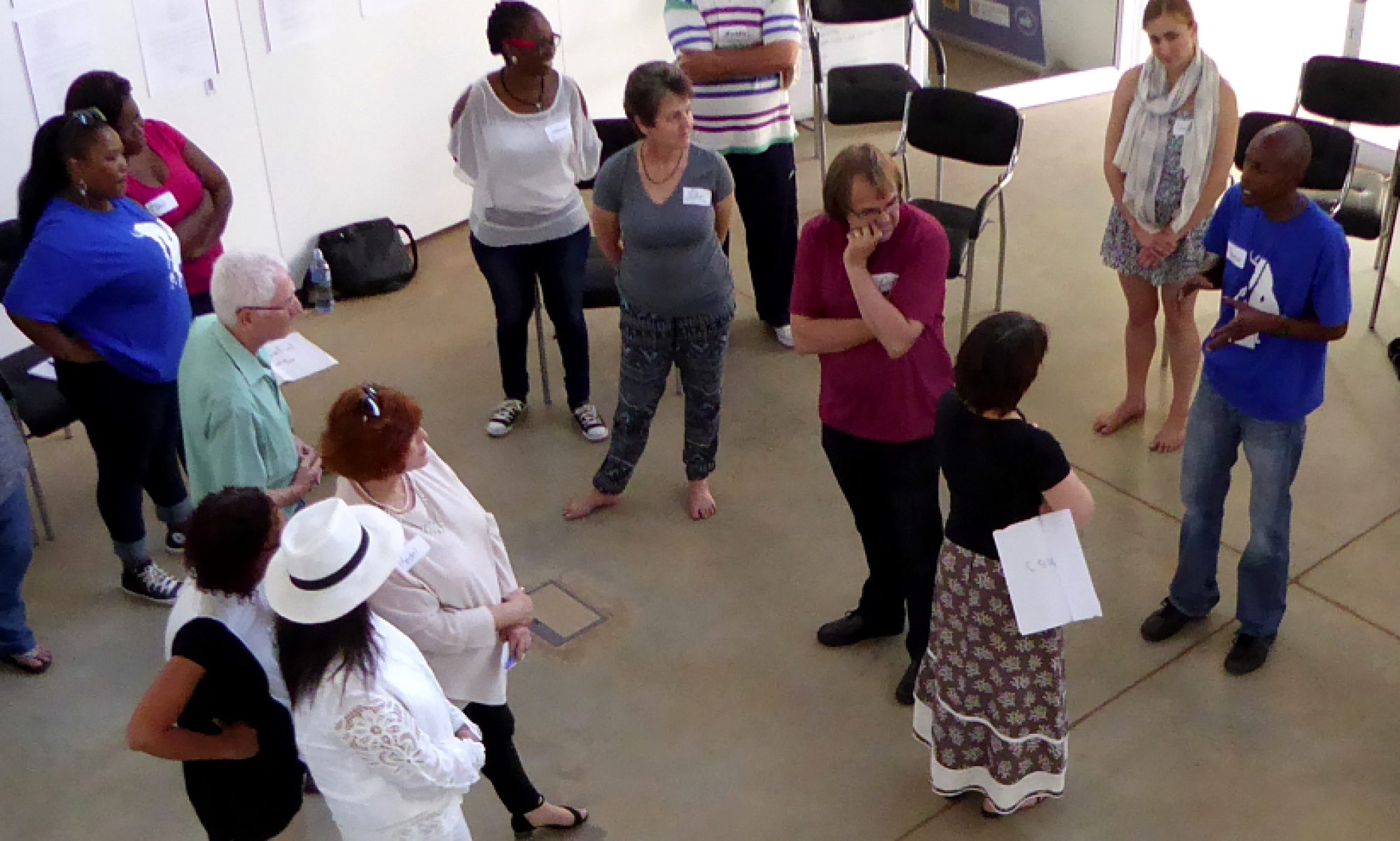
Like a troupe of improvisers on stage who collaborate under high pressure to satisfy an audience’s need for entertainment that is fresh and creative, leaders and teams too must collaborate under high pressure to satisfy the needs of their clients in a fresh and innovative way.
Because the actors create in front of the audience, they have to do it in a way that is respectful to each other while at the same time building trust and rapport with the audience. To get the best out of their teams employers and employees too must work in a respectful manner with each other while at the same time building rapport with clients and customers.
The improv actors incorporate ideas from the audience with ideas from one another to create an integrated high quality performance. Just like people in organisations might have to incorporate input from the client with input from each other to provide the best possible product and service.
Finally, improvisers deliver their performance by playing ‘games’ which follow strict rules and parameters. These parameters could be a metaphor for the policies and procedures people need to follow in order to ensure high quality products and processes.
“Playing Mantis is committed to achieve that which is required from your specific needs. They work along side the client and if things change along the way, they are happy to move with that. They are experienced with people and understand what makes people tick and how to extract the best results from them..” Warren Young, Chief Risk Officer, Sanlam Investments:
Does that mean you put people on the spot to perform?
No. We have found that the most learning takes place when people feel a mixture between excitement and anxiety. Research in neuroscience shows that excitement motivates people to participate and a bit of anxiety keeps them alert. BUT too much anxiety is negative for learning and that’s why we’ll gently draw people into the learning process, by creating a very safe space that is caring, where people can connect on a human level and discover that they are much more creative and courageous than they ever thought possible. That is how improvisers create the safety for each other on the stage to perform at their peak.
“Playing Mantis managed to get the whole company involved very quickly. They had great chemistry with everyone and it was so easy to engage with the work. They made it simple and easy and very quick to get into both the theatre making and the values of the company. Somehow they also managed to get people to own their work. Everyone was empowered to take action and take charge of their own process. I was very happy with them. You cannot fake that kind of connection with people, people will see through you.” Sinikiwe Dube, HR manager at EPPF.